
The director of CRIDA said deficit rainfall may lead to increase in cultivation of pulses. "Though there is an initial shortfall, the area under pulses cultivation in northern states is likely to increase as it is used as a contingency crop."
Union Minister of State for Environment and Forest Jairam Ramesh was on Sunday gheraoed in Hyderabad by people opposed to the introduction of Bt Brinjal in the country.The protesters from Left-affiliated farmers' outfits and Swadeshi Jagaran Manch raised slogans like 'Bt Go Back' and mobbed the minister on the dais at an event organised at the Central Research Institute for Dryland Agriculture in Hyderabad.
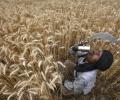
The committee, headed by former agriculture secretary Sanjay Agrawal, discussed ways to "promote zero budget based farming", to "change" crop patterns keeping in mind the changing needs of the country, and to make MSP more "effective and transparent".

With different agencies showing divergent predictions regarding the southwest monsoon, the central government and states are gearing up to face adversity with various line ministries reportedly being directed to undertake mock drills and hold preparatory meetings. Around 56 per cent of the net cultivable area of the country is rain-fed, accounting for 44 per cent of foodgrain production. The June-September rains contribute around 73 per cent of the annual precipitation.

States have been told to prepare in advance to counter any impact of an adverse southwest monsoon.

Technology and prudent practices can ensure that crop output does not suffer in years of drought.

We had prepared a contingency plan for 580 districts, the minister said.

The government will announce minimum support prices for kharif.
 © 2026 Rediff.com - Advertise with us - Disclaimer - Privacy Policy - Sitemap - Feedback - About us - Terms of use - Grievances